A comprehensive guide to selecting the right LED strip lights for your projects. Learn about SMD vs COB vs Neon Flex, understand CRI ratings, IP protection levels, and voltage drop calculations.
Introduction: Navigating the LED Strip Market in 2025
The global LED strip light market continues to grow rapidly, driven by increasing demand for energy-efficient, flexible lighting solutions across commercial, residential, and industrial sectors. For B2B importers and distributors, selecting the right LED strip products from Chinese manufacturers can be challenging given the vast range of specifications, quality levels, and price points available. This comprehensive guide will help you make informed purchasing decisions by covering the key technical parameters, quality indicators, and application considerations that matter most.
SMD vs COB vs Neon Flex: Understanding the Three Main Technologies
The LED strip market in 2025 is dominated by three core technologies, each with distinct advantages. SMD (Surface Mounted Device) LED strips remain the most versatile and cost-effective option, using individual LED packages (such as 2835, 2216, or 5050 chips) soldered onto a flexible PCB. They offer the widest range of configurations, from 36 to 420 LEDs per meter, and are available in virtually every color temperature and voltage option.
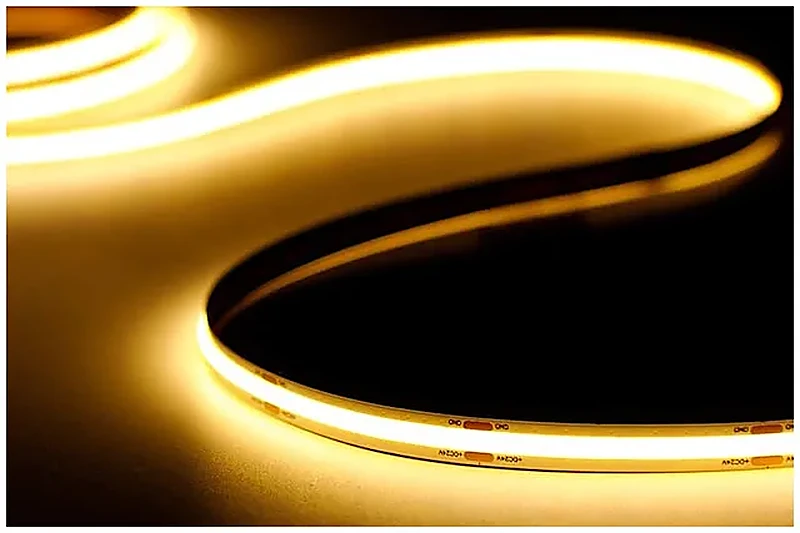
COB (Chip-on-Board) LED strips represent the premium tier, with LED chips bonded directly to the PCB and covered with a phosphor layer. This produces a perfectly smooth, dot-free light output that is impossible to achieve with SMD technology. With chip densities reaching 784 chips per meter, COB strips are the preferred choice for high-end architectural and hospitality projects where light quality is paramount.
LED Neon Flex strips use silicone extrusion to create a neon-tube-like appearance with modern LED efficiency. Available in horizontal, vertical, 3D, and 360-degree bending configurations, they are ideal for signage, architectural outlines, and decorative applications that require IP67/IP68 outdoor protection.
CRI Ratings: Why Color Rendering Matters for Your Projects
Color Rendering Index (CRI) measures how accurately a light source reveals the true colors of objects compared to natural light. For B2B buyers, understanding CRI is critical because it directly impacts end-user satisfaction. Standard LED strips typically offer CRI >80, which is acceptable for general lighting. However, for retail displays, hospitality environments, art galleries, and residential applications, CRI >90 or even CRI >95 is strongly recommended.
At Up-energy, we offer CRI >90 and CRI >95 options across our SMD and COB product lines. Our high-CRI strips use premium LED chips from Samsung and Lumileds, combined with precision phosphor formulations to achieve exceptional color accuracy. When specifying products for your clients, always consider the end application — a retail store displaying clothing or food will benefit enormously from high-CRI lighting.
IP Protection Levels: Choosing the Right Waterproofing
Waterproof protection is one of the most critical specifications for LED strip applications. The IP (Ingress Protection) rating system defines the level of protection against dust and water. Here is a practical breakdown of the most common options:
IP20 — No waterproofing, suitable for dry indoor environments such as cove lighting, under-cabinet lighting, and display cases.
IP65 — Protected against water jets. Options include silicone coating (IP65A), nano coating (IP65B), and PU/silicone dropping (IP65C). Suitable for bathrooms, kitchens, and covered outdoor areas.
IP67 — Protected against temporary immersion. Uses silicone tube encapsulation in transparent (IP67A), white (IP67B), or hollow extrusion (IP67C) variants. Ideal for outdoor architectural lighting, garden paths, and building facades.
IP68 — Protected against continuous submersion. Features silicone tube with stuffing (IP68A) or solid extrusion (IP68B), rated for underwater use up to 10kPa pressure. Required for swimming pools, fountains, and marine applications.
Voltage Drop Calculations and Power Planning
Voltage drop is a critical consideration for long LED strip runs. As current flows through the copper traces on the PCB, resistance causes a gradual decrease in voltage along the strip length, resulting in dimmer LEDs at the far end. For 12V strips, the maximum recommended run length is typically 5 meters from a single feed point. For 24V strips, this extends to approximately 10 meters. Our 48V high-voltage strips can achieve runs of up to 20 meters with minimal brightness variation.
To mitigate voltage drop in longer installations, consider these strategies: use 24V or 48V strips instead of 12V; feed power from both ends of the strip; use thicker PCB copper (2oz or 3oz); and plan multiple power injection points for very long runs. Our engineering team can provide detailed voltage drop calculations for your specific project requirements.
Quality Indicators: What to Look for in a Reliable Supplier
When evaluating LED strip suppliers, several quality indicators can help you distinguish premium manufacturers from budget producers. First, look for SDCM (Standard Deviation of Color Matching) values — SDCM <3 (3-step MacAdam ellipse) indicates excellent color consistency between strips. Second, verify that the manufacturer performs 100% integrating sphere testing on every reel, not just batch sampling. Third, check for recognized certifications including CE-EMC, CE-LVD, RoHS, and ISO 9001:2015.
At Up-energy, we maintain SDCM <3 across our product lines and test every single reel with calibrated integrating sphere equipment before shipment. Our ISO 9001:2015 and ISO 14001 certifications demonstrate our commitment to both quality management and environmental responsibility. We also provide detailed test reports with every order, including chromaticity coordinates, luminous flux, and CRI measurements.
Conclusion: Making the Right Choice for Your Business
Selecting the right LED strip products requires balancing technical specifications, quality requirements, and budget considerations. By understanding the key differences between SMD, COB, and Neon Flex technologies, and by paying attention to critical parameters like CRI, IP rating, and color consistency, you can make purchasing decisions that satisfy your end customers and build your reputation as a reliable lighting supplier. Contact our team at [email protected] for personalized product recommendations and competitive B2B pricing.
Interested in Our Products?
Contact our sales team for product specifications, samples, and competitive B2B pricing.